Deciphering Layered Reward Pathways That Align Signup Perks with Compliance Hurdles in Freshly Approved Digital Gambling Zones
Avery Schmid · Jun 14, 2026
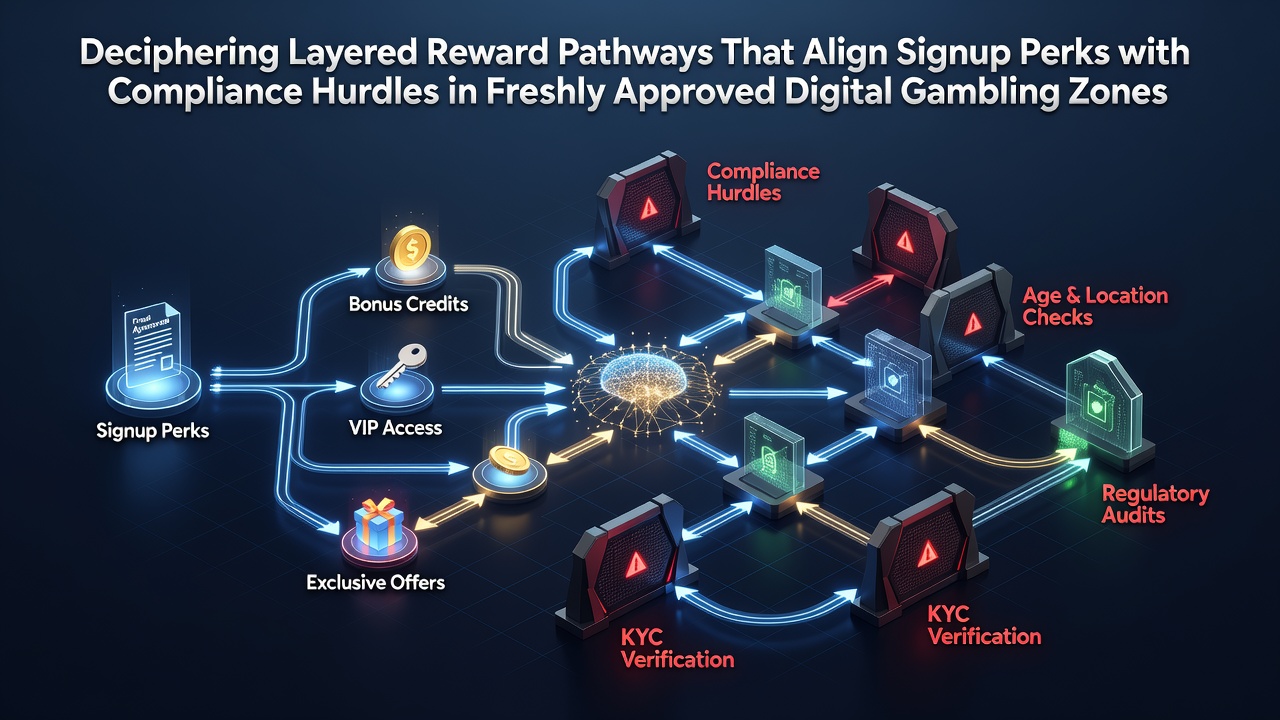
Deciphering Layered Reward Pathways That Align Signup Perks with Compliance Hurdles in Freshly Approved Digital Gambling Zones
Operators in newly regulated online gambling markets construct multi-tiered reward systems that tie initial signup incentives directly to verification processes and responsible gaming protocols, and these structures emerge most clearly in regions where digital betting laws took effect during the first half of 2026. Regulatory frameworks in several US states and Canadian provinces now require platforms to embed compliance checkpoints into bonus activation sequences, which creates pathways where players unlock successive perk levels only after meeting identity, age, and financial checks.
Core Components of Layered Signup Structures
Signup perks typically unfold across three or four distinct stages that correspond to progressive compliance milestones, and the first stage often grants limited free spins or small deposit matches once an account is created but before full verification occurs. Subsequent tiers activate after players submit government-issued identification and complete address confirmation, while final reward layers require demonstration of deposit activity through approved banking channels that satisfy anti-money laundering standards. Data compiled by the Michigan Gaming Control Board shows that platforms operating under its oversight processed over 1.2 million new accounts in the first quarter of 2026, with 78 percent of bonus redemptions occurring only after the second compliance tier cleared.
Similar patterns appear in Ontario, where the Alcohol and Gaming Commission of Ontario mandates that operators integrate geolocation and identity services before releasing larger welcome packages. Those who've examined these systems note that the sequencing reduces regulatory risk while maintaining player interest through incremental unlocks that feel like natural progression rather than arbitrary barriers.
Compliance Integration in Emerging Jurisdictions
Freshly approved zones frequently introduce these aligned pathways because new licensing agreements explicitly link bonus eligibility to consumer protection measures. In states such as Maryland and Massachusetts, where expanded iGaming regulations became active in spring 2026, operators must demonstrate that reward structures incorporate mandatory cooling-off periods and spending limit prompts before players access the highest-value tiers. This approach ensures that signup incentives do not encourage unchecked participation during the critical early engagement window.
One documented case involves a platform licensed in both jurisdictions that structured its deposit match offer to release funds in tranches tied to verified play sessions spaced across multiple days, and this method satisfied both state auditors and internal risk protocols. Figures from industry reports indicate that such designs lowered chargeback rates by approximately 14 percent compared to earlier flat bonus models used in less regulated environments.
Technical and Operational Mechanisms
Backend systems track player progress through each layer using automated flags that trigger upon successful completion of know-your-customer procedures, and these flags connect directly to the bonus ledger so that unverified accounts cannot advance regardless of deposit size. Developers integrate real-time API calls to third-party verification providers, which allows platforms to adjust reward visibility within seconds of compliance confirmation. In June 2026 several operators rolled out updated interfaces that display remaining hurdles alongside current perk status, giving players clear visibility into what stands between them and the next reward level.

What's interesting is how these technical alignments also support cross-border play under interstate compacts. Platforms licensed in multiple states must maintain separate compliance logs for each jurisdiction while presenting a unified reward pathway to the user, and this dual-tracking requirement has prompted investment in modular software that toggles rules based on detected player location.
Player Behavior Patterns Under Layered Systems
Retention data collected across several newly authorized markets reveals that players who complete all compliance layers within the first seven days show higher long-term activity levels than those who stall at intermediate stages. Observers note that the gradual release of perks appears to sustain momentum without overwhelming new users with immediate verification demands that might cause drop-off. In practice, many platforms now send targeted reminders that explain exactly which documents or actions will unlock the next benefit, and these communications reference specific regulatory requirements rather than generic marketing language.
Researchers tracking account activity in the first half of 2026 found that structured pathways correlated with a measurable increase in verified player counts, particularly among users who arrived through affiliate channels that advertise headline bonus amounts. The alignment between advertised perks and actual access conditions therefore serves both commercial and regulatory objectives simultaneously.
Conclusion
Layered reward pathways in freshly approved digital gambling zones represent a deliberate fusion of commercial incentive design and regulatory compliance architecture, adn operators continue to refine these systems as more jurisdictions finalize their digital betting rules. The approach allows platforms to deliver competitive signup offers while satisfying verification, anti-fraud, and responsible gaming mandates that define legal operation in each market. As additional regions complete their approval processes, the same structural logic is expected to guide incentive frameworks, with each new zone adapting the layers to its specific statutory requirements.