The Evolution of Real-Time Incentive Adjustments in Multi-Jurisdictional US Gambling Platforms
Finley Sullivan · Jun 5, 2026
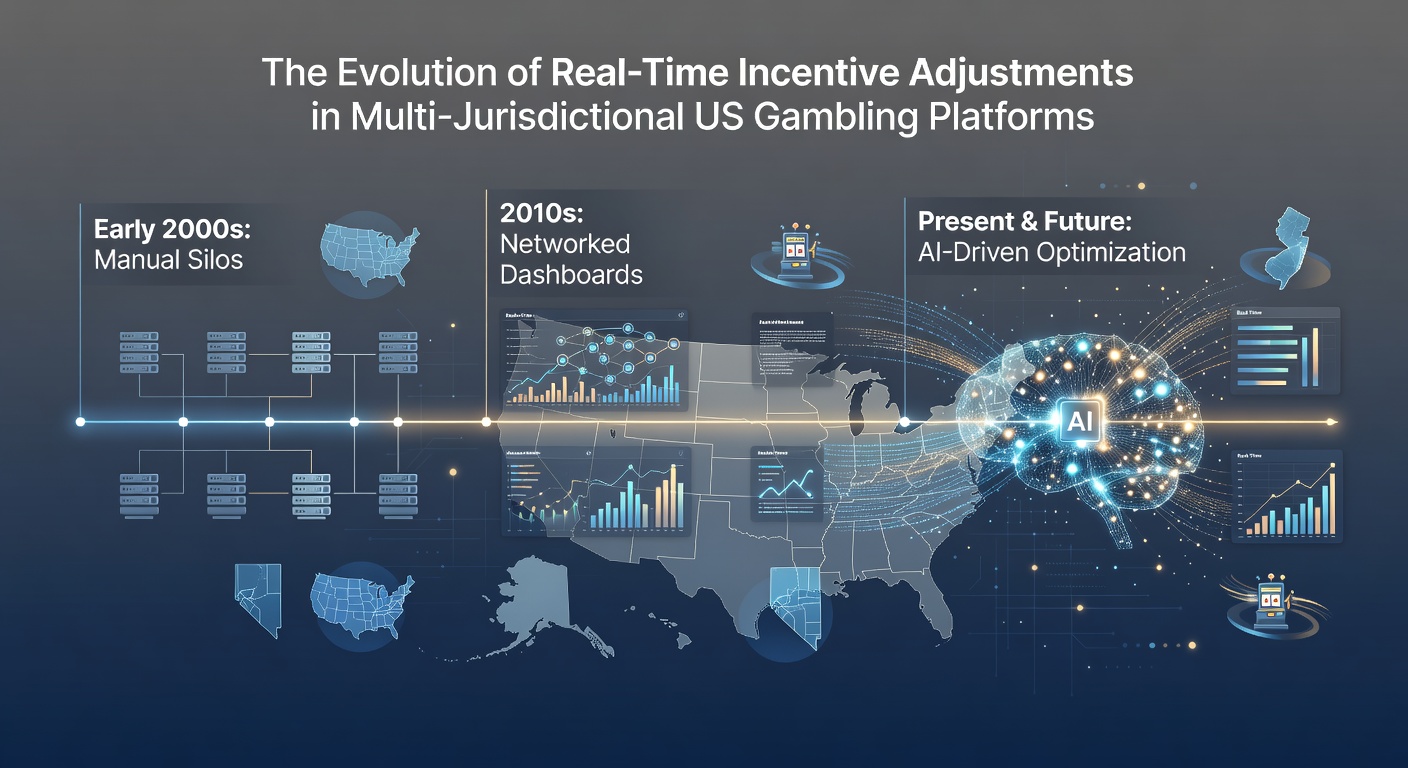
The Evolution of Real-Time Incentive Adjustments in Multi-Jurisdictional US Gambling Platforms
Multi-jurisdictional US gambling platforms have shifted from static bonus structures toward systems that modify incentives while players remain active, and this change traces back to the spread of legalized online betting after the 2018 PASPA repeal. Platforms operating across states such as New Jersey, Pennsylvania, and Michigan faced separate regulatory requirements that made fixed promotions inefficient, so operators began building tools that recalculate offers based on location, session data, and compliance rules in the same moment.
Early implementations relied on batch updates that ran overnight, yet by 2022 several major operators introduced live engines that pulled geolocation signals and account flags every few seconds. Those systems allowed a player crossing from one state into another to see their available deposit match or free-spin package change without logging out, and the adjustment reflected the stricter playthrough rules of the new jurisdiction automatically.
Regulatory Drivers Behind Dynamic Systems
State gaming commissions required distinct responsible-gambling thresholds and tax reporting, which forced platforms to segment user pools by license. The New Jersey Division of Gaming Enforcement and the Pennsylvania Gaming Control Board each published technical standards that demanded real-time audit trails for every incentive modification. Operators responded by embedding rule engines that checked regulatory tables before displaying any offer, and this architecture became standard once interstate compacts expanded in 2024.
Data from the American Gaming Association shows that platforms managing three or more state licenses processed roughly 47 percent more incentive recalculations per active user in 2025 than they did two years earlier. The increase stemmed directly from compact agreements that permitted shared player pools while preserving each state's unique restrictions on bonus size and expiration.
Technology Enabling Instant Recalculation
Modern platforms integrate geofencing APIs with player-account ledgers and jurisdictional rule sets inside a single microservice. When a user initiates a deposit, the service queries the current state license, applies the corresponding maximum bonus percentage, and returns the adjusted figure before the payment processor completes the transaction. Session-length caps and loss-limit triggers update the same way, pulling fresh variables without requiring a page reload.
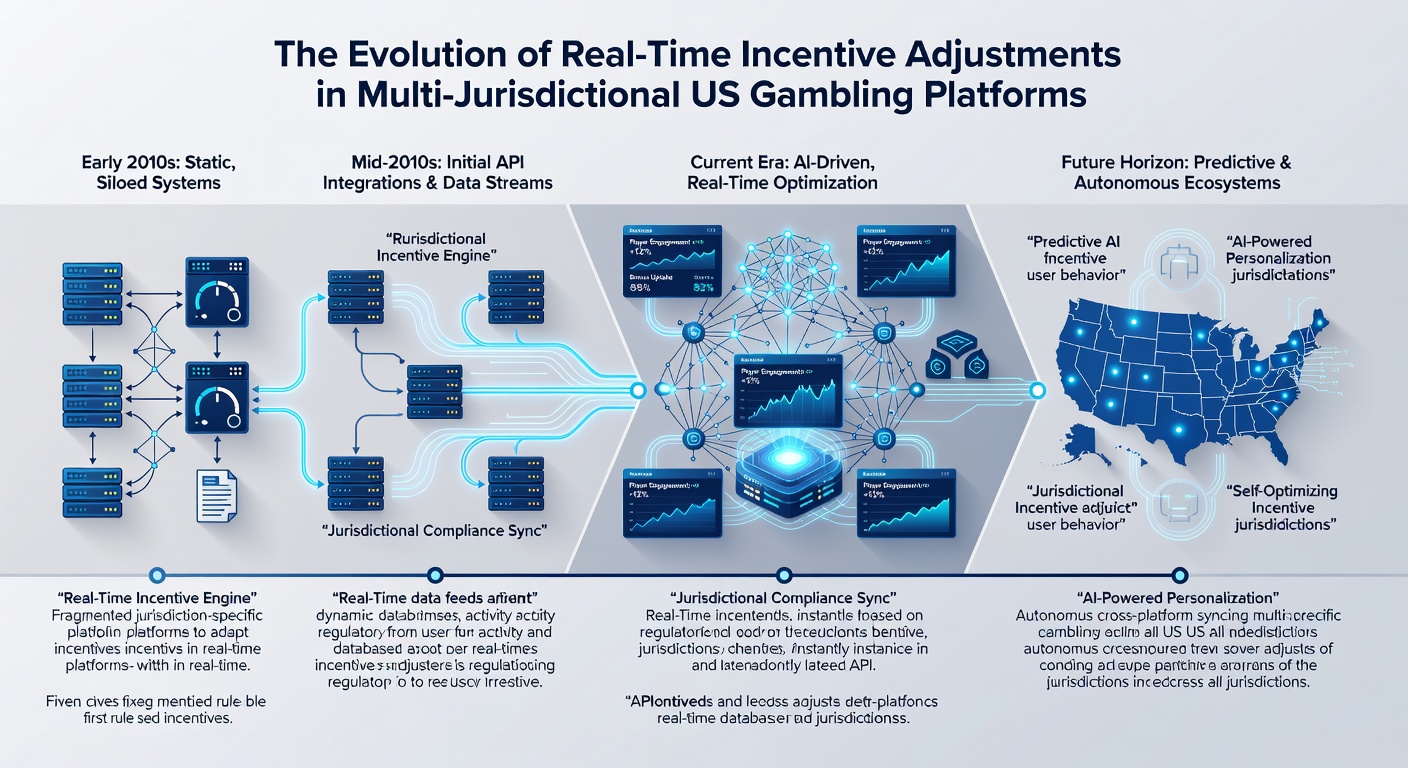
Cloud providers began offering low-latency edge computing nodes inside each licensed state by mid-2025, which cut average adjustment times from 800 milliseconds to under 120. This speed mattered because regulators required that any displayed promotion remain valid for the entire transaction window, and delays risked compliance violations. Observers note that operators who adopted edge nodes reported fewer player-support tickets related to mismatched offers.
Impact on Player Retention Patterns
Retention metrics collected by platform analytics teams reveal that users who received jurisdiction-specific reload bonuses during a single session stayed active 18 percent longer than those who saw only generic offers. The difference appears because the real-time engine can surface a cashback tier that matches the player's current loss threshold in that state, and the match occurs before the player decides to end the session. Studies from the University of Nevada's International Gaming Institute documented similar retention lifts in markets where cross-border play became common after compact ratification.
June 2026 brought further refinement when several operators linked their engines to updated self-exclusion registries shared among compact states. A player who enrolled in one state's exclusion list triggered an immediate pause on all active incentives across every connected license, and the system logged the change for each regulator simultaneously. This synchronization reduced the window during which an excluded user might still see promotional content.
Future Technical and Compliance Directions
Engineers are testing machine-learning models that predict which incentive adjustment will keep a player inside both spending and time limits while satisfying every state's audit requirements. Early pilots feed historical bet data and real-time location into the model, then output a revised free-spin count or deposit match before the next spin resolves. Regulatory staff in Michigan and West Virginia have requested access to model decision logs to verify that outputs remain within approved parameters.
Those who've studied these deployments report that the combination of edge computing, shared exclusion databases, and compact-driven rule tables has turned incentive management into a continuous compliance process rather than a periodic marketing task. Platforms that maintain separate static bonus tables for each state now represent a shrinking minority of the market.
Conclusion
The move toward real-time incentive adjustments reflects the need to reconcile differing state rules inside a single player session, and the infrastructure supporting those adjustments continues to mature as more states join existing compacts. Operators that invested early in unified rule engines and low-latency data paths now handle regulatory variation without interrupting gameplay, while newer entrants adopt the same architecture to remain competitive. The pattern established through 2026 indicates that further integration of predictive models and shared regulatory feeds will remain the primary direction for platforms operating across multiple US jurisdictions.