Virginia Governor Vetoes Skill Games and Fairfax Casino Bills, Pushing for Unified Gaming Oversight
Avery Bauer · Apr 12, 2026

Virginia Governor Vetoes Skill Games and Fairfax Casino Bills, Pushing for Unified Gaming Oversight
teh Swift Vetoes That Shook Virginia's Gaming Scene
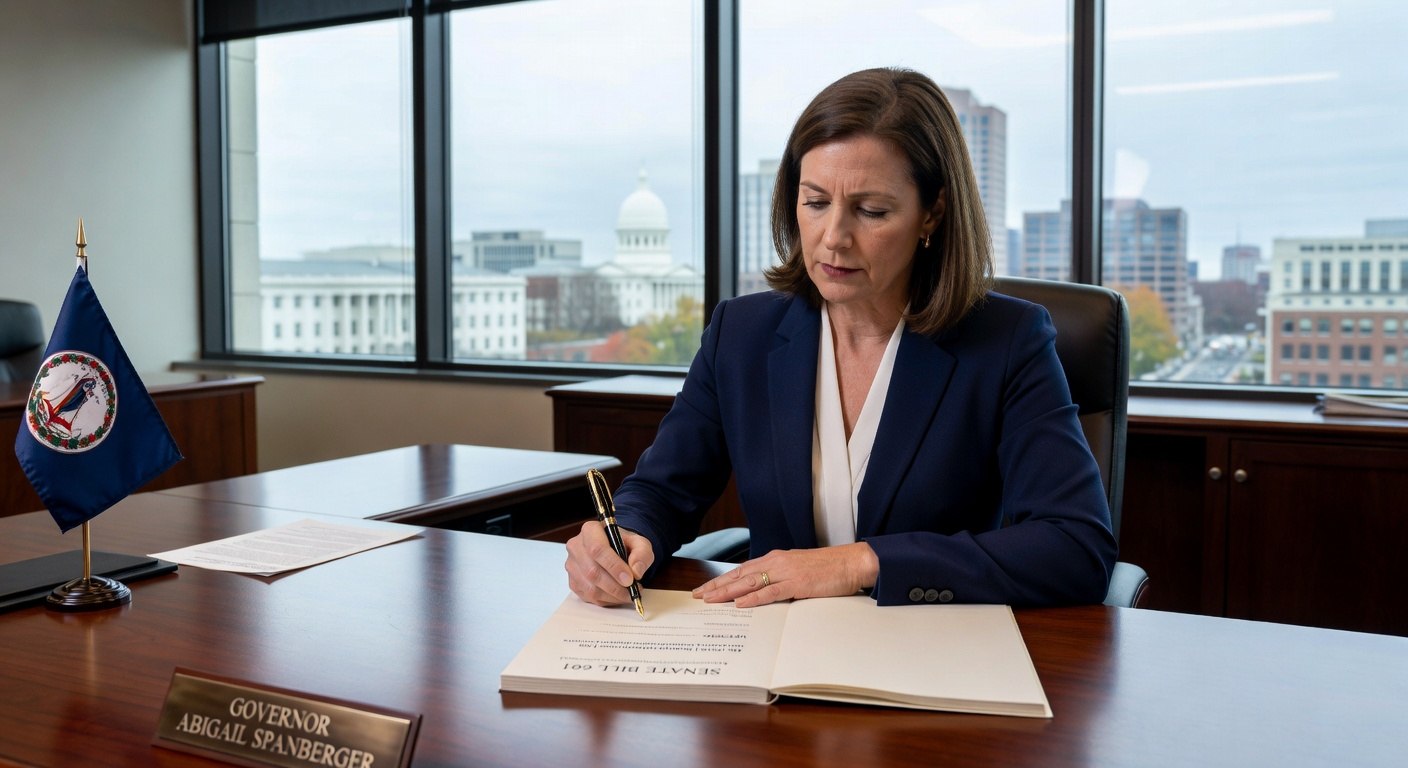
Virginia Governor Abigail Spanberger struck down Senate Bill 661 on Friday, April 11, 2026, blocking legalization of up to 25,000 skill games across the state, and this came just a day after she vetoed Senate Bill 756 on Thursday, April 10, 2026, which aimed to greenlight a commercial casino resort in Fairfax County. Reports from Casino.org highlight how these actions underscore ongoing tensions in the state's approach to gambling expansion, where proponents see economic boosts and opponents flag regulatory gaps. Observers note that skill games, often resembling slot machines but marketed as games of skill, have proliferated in Virginia's convenience stores and truck stops, generating millions in unreported revenue while dodging full taxation.
But here's the thing: Spanberger didn't stop at the veto pen; she reiterated a firm demand for lawmakers to create and fund a centralized, independent gaming regulatory commission, one that would oversee all forms of gambling from lotteries to casinos, and this push addresses what she describes as risks from fragmented oversight, potential illicit activity, consumer protection shortfalls, and uneven burdens on low-income and minority communities. Data from state analyses reveal that without such a body, Virginia's gaming landscape remains patchwork, with horse racing tracks, charitable bingo, and online sports betting operating under varying rules since legalization efforts ramped up post-2020.
Unpacking Senate Bill 661: The Skill Games Bid
Senate Bill 661 sought to legalize and regulate up to 25,000 skill game machines statewide, imposing a 15% tax on gross gaming revenues while directing funds toward schools and local governments; proponents argued this would capture an estimated $200 million annually in taxes from an industry already thriving in gray-market status. Yet experts who've tracked Virginia's skill games saga point out that these devices, which blend electronic gaming with skill elements like stopping reels at the right moment, exploded from fewer than 1,000 machines in 2018 to over 40,000 by 2025, fueling legal battles between operators, truck stop owners, and lawmakers wary of unregulated proliferation.
Take one case where Virginia courts ruled in 2024 that certain skill games qualified as illegal gambling, prompting a legislative scramble; that said, SB 661 aimed to formalize their place with age restrictions, location caps at non-gas-station sites, and oversight by the Virginia Lottery, but Spanberger's veto signals deeper concerns, as she emphasized in her statement that piecemeal approvals exacerbate enforcement challenges. And while operators celebrated near-passes in prior sessions, this rejection leaves the machines in limbo, with seizures continuing under existing laws.
What's interesting is how skill games differ from traditional slots; players influence outcomes through timing, which supporters leverage to claim they're not pure chance, although studies from the American Gaming Association indicate player loss rates hover around 85-90%, mirroring casino machines and raising questions about true skill involvement.
Senate Bill 756 and the Fairfax County Casino Dream
The companion veto targeted Senate Bill 756, which would have positioned Fairfax County as eligible for one of Virginia's five commercial casino licenses, building on the 2020 referendum that approved casinos in Norfolk, Portsmouth, Danville, and Bristol, plus a potential fifth; backers projected a $2.5 billion resort with 1,500 slots, table games, and a hotel, promising thousands of jobs and $200 million in yearly taxes. Fairfax, Virginia's wealthiest jurisdiction with over a million residents near Washington D.C., saw this as an economic jolt, especially since the fifth license has sat unused amid political gridlock.
However, Spanberger highlighted in her veto message that approving another casino without comprehensive regulation invites the same issues plaguing existing projects—delays, cost overruns, and community pushback—while fragmented authority splits duties between the Lottery Board, local governments, and courts. People who've followed Virginia's casino rollout observe that the four approved sites have invested billions, yet full operations in places like Norfolk's Rivers Casino await final licensing tweaks as of early 2026, underscoring the need for streamlined oversight.
Turns out, Fairfax's bid gained traction after a 2025 locality vote, but the governor's action keeps the door cracked for future consideration only under her proposed framework, where a dedicated commission would handle licensing, audits, and problem gambling programs uniformly.
Governor Spanberger's Core Demands and Cited Risks
Central to both vetoes stands Spanberger's call for a fully funded, independent Virginia Gaming Commission, modeled after bodies like New Jersey's Division of Gaming Enforcement, which would centralize rules for skill games, casinos, sports betting, and more, preventing regulatory silos that breed confusion. According to her public statements reported by Gambling Insider, fragmented oversight heightens risks of money laundering, underage access, and addiction spikes, particularly in underserved areas where convenience store skill games cluster.
She pointed to data showing disproportionate impacts: low-income households spend up to 5% of income on gambling per National Council on Problem Gambling analyses, while minority communities face higher problem gambling rates, as evidenced in Virginia's own 2024 health department surveys revealing elevated helpline calls from urban and rural poor zip codes. Illicit activity looms large too; undercover stings in 2025 busted skill game venues serving minors and laundering cash, issues a unified regulator could curb through real-time monitoring and licensing rigor.
Observers who've studied multi-state models note that states like Pennsylvania thrive with strong commissions handling everything from audits to consumer complaints, and Virginia's current setup—split across agencies—lags, with the Lottery projecting oversight costs could exceed $50 million yearly for new expansions.
Virginia's Gaming Evolution and the Bigger Picture
Since voters approved sports betting in 2020 alongside casino referendums, Virginia has licensed operators like DraftKings and FanDuel, generating $500 million in taxes by 2025, yet skill games remain the wild card, operating in legal purgatory after Supreme Court affirmations of their gambling status. Lawmakers pushed SB 661 amid operator lawsuits and economic lobbies claiming $1 billion in annual play, but Spanberger's vetoes echo prior governors like Ralph Northam, who signed initial expansions with caveats for future regulation.
adn while Fairfax's casino push taps Northern Virginia's affluent market—think D.C. commuters seeking entertainment—the bill's defeat prolongs uncertainty for developers eyeing the fifth license, with projects in Portsmouth and Danville already navigating local zoning battles. Experts point out that without a commission, interstate compacts and federal compliance grow trickier, especially as neighboring Maryland and West Virginia draw Virginia players across borders.
Now, with the General Assembly's 2026 session winding down, the ball's in lawmakers' court to craft Spanberger's commission or override vetoes, a tall order needing two-thirds majorities in both chambers—a feat unseen in Virginia gaming votes since 2018.
Reactions, Implications, and Road Ahead
Industry groups like the Skill Games Coalition decried the vetoes as stifling small businesses, projecting 10,000 job losses if machines stay banned, whereas consumer advocates praised the move for prioritizing safeguards. Local officials in Fairfax lamented missed revenues for schools and transit, but community groups in low-income areas welcomed the pause, citing pilot studies where skill game zones correlated with 20% rises in gambling disorder reports.
The reality is, these vetoes cap Virginia's gaming growth at four casinos, online betting, and lotteries until reform, forcing operators to lobby harder; one study from George Mason University researchers found that regulated states see 30% higher tax yields long-term due to compliance efficiencies, a metric lawmakers can't ignore.
Yet pressure builds: with budget shortfalls looming, compromise bills could emerge in special sessions, blending skill game taxes with commission funding, although Spanberger's track record suggests she'll hold firm without ironclad consumer protections.
Conclusion
Governor Abigail Spanberger's consecutive vetoes of SB 661 and SB 756 on April 10 and 11, 2026, crystallize Virginia's crossroads in gambling policy, where economic allure clashes with oversight imperatives, and her blueprint for a centralized commission offers a path forward amid risks to vulnerable populations. As stakeholders regroup, the coming months will test whether fragmented fixes prevail or unified regulation takes hold, shaping not just skill games and casinos but the state's entire gaming framework for years ahead. Watch this space—Virginia's gaming bets are far from settled.